Best Robot Vacuum for Pet Hair — How to Pick the Right Roborock Without Overpaying
You mopped yesterday. The dog still left a fur line along the baseboards by dinner, and the afternoon sun is showing off the grit trail from the kitchen to the front door. A stick vacuum feels like a second job, and the last basic robot you tried just mapped the whole floor, died under the sofa with a full bin, and made you feel like you’d bought a very expensive paperweight. You can see current options.
If you want floors that stay presentable without standing over them every evening, a robot that actually handles pet hair — and doesn’t need babysitting — is the upgrade that pays for itself in reclaimed hours. The catch is that the robot vacuum aisle is flooded with jargon: LiDAR, obstacle avoidance, self-empty docks, mopping pads. Picking the wrong mid-tier or overpaying for a flagship you don’t need is the most common mistake. This guide walks you through what actually changes the decision for a pet-hair household, and where a Roborock robot vacuum fits in that math.
What actually matters for pet hair
Most robot vacuum specs are written to impress, not to help. For a home with shedding animals and tracked-in dirt, a handful of features do almost all the work, and the rest is marketing noise. Here’s what to weigh, and why. Check the official listing before you buy.
| Feature | Why it matters for pet hair | What to look for |
|---|---|---|
| Self-emptying dock | Pet hair clogs small bins fast; a dock that empties the bin into a larger bag means you only service it every few weeks | Look for a dock with a sealed dust bag and a stated capacity (e.g., weeks of debris) |
| LiDAR navigation | Maps the home, plans efficient paths, and avoids the “bounce around until the battery dies” behavior of cheap robots | LiDAR (laser) mapping beats random-bounce and camera-only navigation for large or multi-room homes |
| Obstacle avoidance | Keeps the robot from eating dog toys, charging cables, and shoe piles | Camera + AI obstacle detection on mid-to-upper models |
| Brush design | Anti-tangle / dual brushes handle long pet hair without wrapping and choking the roller | Look for anti-tangle brush claims and easy-access brush removal |
| Suction (Pa) | Lifts embedded hair and grit from hard floors and low-pile carpet | Higher Pa helps on carpet; on hard floors, navigation and dock matter more than raw suction |
| App scheduling + zoning | Lets you run the robot while you’re out and skip rooms you don’t want mopped | Multi-room mapping, no-go zones, and scheduled runs |
| Mopping (where relevant) | Wipes up sticky spots and tracked-in grime on hard floors | Combo vac+mop models; skip if you’re all carpet |
Swipe sideways to compare →
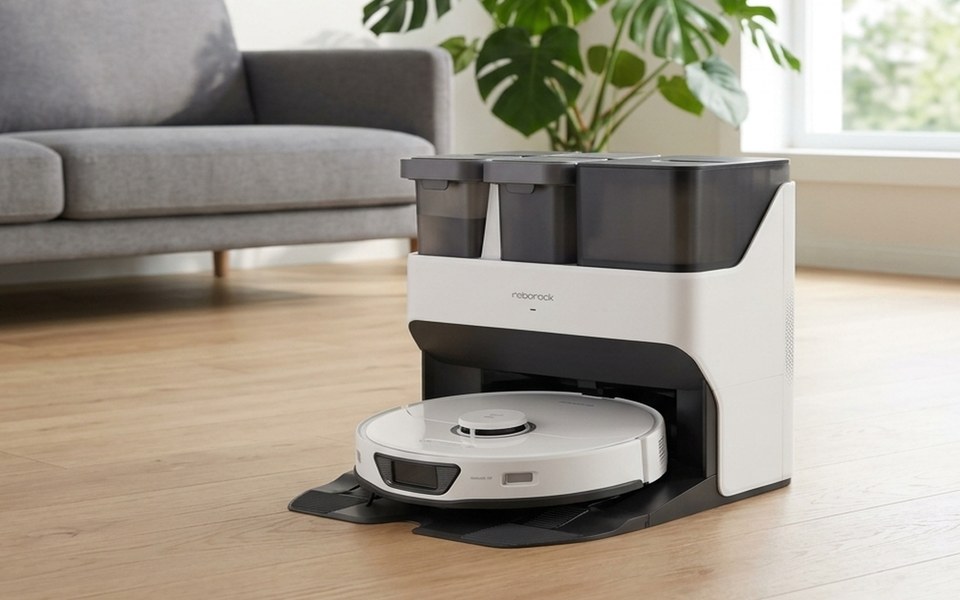
The single biggest upgrade for pet owners is the self-emptying dock. A robot with a small internal bin will be full by the second run of the week, and a full bin is where “set and forget” quietly dies. A dock that transfers debris into a larger, sealed bag means you’re changing a bag every few weeks instead of emptying a tiny bin every other day. That, plus LiDAR mapping so the robot covers the whole floor in a logical path, is the core of a robot that actually works for a busy household with animals. Check the official listing before you buy.
Our shortlist
Roborock — the starting brand for most pet-hair homes
If you’re choosing a robot vacuum for a home with pets and you want the least friction between “I pressed start” and “the floors are done,” Roborock is the brand to start with. Its lineup is built around the two things that make a robot useful in a real house: LiDAR-based navigation so it maps and plans its route instead of wandering, and self-emptying docks so the bin doesn’t become a weekly chore. The brand’s current robot vacuum collection spans a range of models, from the more accessible Q7 Series up through the Q10 Series and the higher-end Saros 10R and Saros 20, so you can match the price to your floor plan rather than buying the top shelf out of habit.
What makes the mid-tier the sweet spot for most people is that you get the dock and the mapping — the features that actually save time — without paying for flagship extras you may not use. A model like the Qrevo S5V or the Q10 S5+ gives you the self-empty dock and LiDAR navigation that handle daily pet hair and tracked-in dirt, while the Qrevo CurvX and Saros 10R push further into advanced obstacle avoidance and combo cleaning for larger or more complex homes. Roborock also sells the consumables you’ll cycle through — Dust Bags and Mop Cloths — so the ongoing cost is predictable rather than a surprise. One honest caveat: exact warranty terms and current pricing shift, so confirm the specifics on the brand’s site before you commit, but the core value proposition — a mapped, self-emptying robot you can schedule — is consistent across the lineup.
Where to look instead (and the trade-offs) You can see current options.
- Budget / entry-level robots (under ~$300): These usually skip the self-empty dock and rely on random or camera-only navigation. For a small, open apartment with light shedding they can work, but with pets and multiple rooms the “full bin by day two” problem returns. If your budget is tight, a good stick vacuum plus a cheap robot for hard floors is often a smarter split than a struggling mid-range robot.
- Flagship / top-tier models: The very top of the lineup adds premium obstacle avoidance, steam or advanced mopping, and the highest suction. If your home is large, multi-level, or you want a true vac+mop combo that handles sticky messes, the step up can be worth it. If you mostly have hard floors and one or two pets, you’ll likely pay for features you don’t need.
- No-name / marketplace brands: Cheaper still, but inconsistent navigation, weaker build quality, and spotty support. For a daily, hands-off job with pets, the reliability of an established brand usually justifies the price. See options
The decision mostly comes down to two questions: Do you need the self-empty dock (almost always yes for pets), and do you need combo mopping or top-tier obstacle avoidance (depends on your floors and layout)? Answer those and the right tier sorts itself out. You can see current options.
Mid-check
Before you lock in a model, it helps to see the current lineup side by side, because Roborock updates its robot vacuum range and pricing regularly. Skim the options and match the dock, navigation, and mopping features to your home.
How to choose in 5 minutes
- Confirm you need a dock. If you have pets and want it to run unattended, a self-emptying dock is non-negotiable — skip models without one. See options
- Match navigation to your layout. Multi-room or large home → LiDAR mapping. Small open apartment → you can go a tier lower, but LiDAR still maps more reliably. See options
- Pick the tier by floor type. Mostly hard floors → mid-tier with optional mopping. Significant carpet or embedded hair → add suction and consider a combo model. See options
- Check obstacle avoidance for clutter. Lots of pet toys, cables, or shoe piles → choose a model with camera/AI obstacle detection. See options
- Budget for consumables. Factor in Dust Bags and Mop Cloths so the ongoing cost isn’t a surprise.
- Verify current terms. Pricing, availability, and warranty details change — confirm on the brand’s site before checkout. See options
Best Robot Vacuum for Pet Hair with Docking Station
People already find this page for “best robot vacuum for pet hair with docking station.” The short answer: match the job (who it’s for / skip), then verify product themes on site: self-emptying / dock, lidar / navigation, cordless pool robot. See current options.
FAQ
Is a self-emptying dock worth the extra cost for pet hair?
Yes, for most pet households. A small internal bin fills quickly with hair and debris, which is exactly where “set and forget” breaks down. A self-emptying dock transfers that debris into a larger sealed bag, so you service the robot every few weeks instead of every run. Roborock’s robot vacuum lineup is built around this dock-plus-LiDAR combination, which is why it’s a common starting point for pet owners.
Do I need a flagship model, or is a mid-tier robot enough?
For most homes, a mid-tier model is enough. The flagship tier adds premium obstacle avoidance, advanced mopping or steam, and the highest suction — useful for large, cluttered, or multi-level homes, but often overkill if you have hard floors and one or two pets. The dock and LiDAR navigation do most of the daily work, so match the extra features to your actual layout rather than the top of the list. You can see current options.
Will a robot vacuum handle long pet hair without tangling?
Look for anti-tangle or dual-brush designs, which are better at moving long hair without wrapping it around the roller. Even with anti-tangle brushes, a quick brush check every few weeks keeps performance consistent. Pair that with a self-emptying dock and the maintenance stays minimal. Check the official listing before you buy.
Can I use a robot vacuum if I already have a good vacuum?
Yes — they do different jobs. The robot is for daily, hands-off maintenance: keeping floors presentable between deep cleans. Your upright or stick vacuum is still the tool for a thorough clean of corners, edges, and high-pile carpet. Think of the robot as the “keep it tidy” layer, not a replacement for your main vacuum. You can see current options.
How do I avoid buying the wrong model?
Start from the two features that matter most — the self-emptying dock and LiDAR navigation — then add mopping or top-tier obstacle avoidance only if your floors and layout actually call for it. That filters out most of the overpaying. When in doubt, browse the current Roborock lineup and match the model to your home type rather than the highest spec.
Bottom line
If you want floors that stay clean without standing over them every evening, start with a mid-tier Roborock that pairs a self-emptying dock with LiDAR navigation — the two features that turn a robot from a novelty into a hands-off daily task. Step up to a combo or flagship model only if your home is large, cluttered, or mostly carpeted; step down only if you’re on a tight budget and can accept a smaller bin and simpler navigation. Match the model to your pets and your floor plan, factor in the ongoing cost of dust bags and mop cloths, and confirm current pricing and warranty terms on the brand’s site before you buy.
Related guides
Sources
- Roborock US — Robot vacuum collection: https://us.roborock.com/collections/robot-vacuums
- Roborock US — Robot vacuum cleaner: https://us.roborock.com/pages/robot-vacuum-cleaner
- Roborock US — Home: https://us.roborock.com/
- YouTube — Roborock Saros 10R review: https://www.youtube.com/watch?v=RXKR7-McdF0
- YouTube — Top robot vacuums for pet hair: https://www.youtube.com/watch?v=28wFjT3pjPQ
Start with Roborock
- Strong brand ladder mid → premium
- Good fit for pets + hard floors
- Official store deep links available
Who should skip
- · You only need a 10-minute stick vacuum
- · You refuse any dock or app