Steel Cable Review: Specs, Uses, and What to Verify
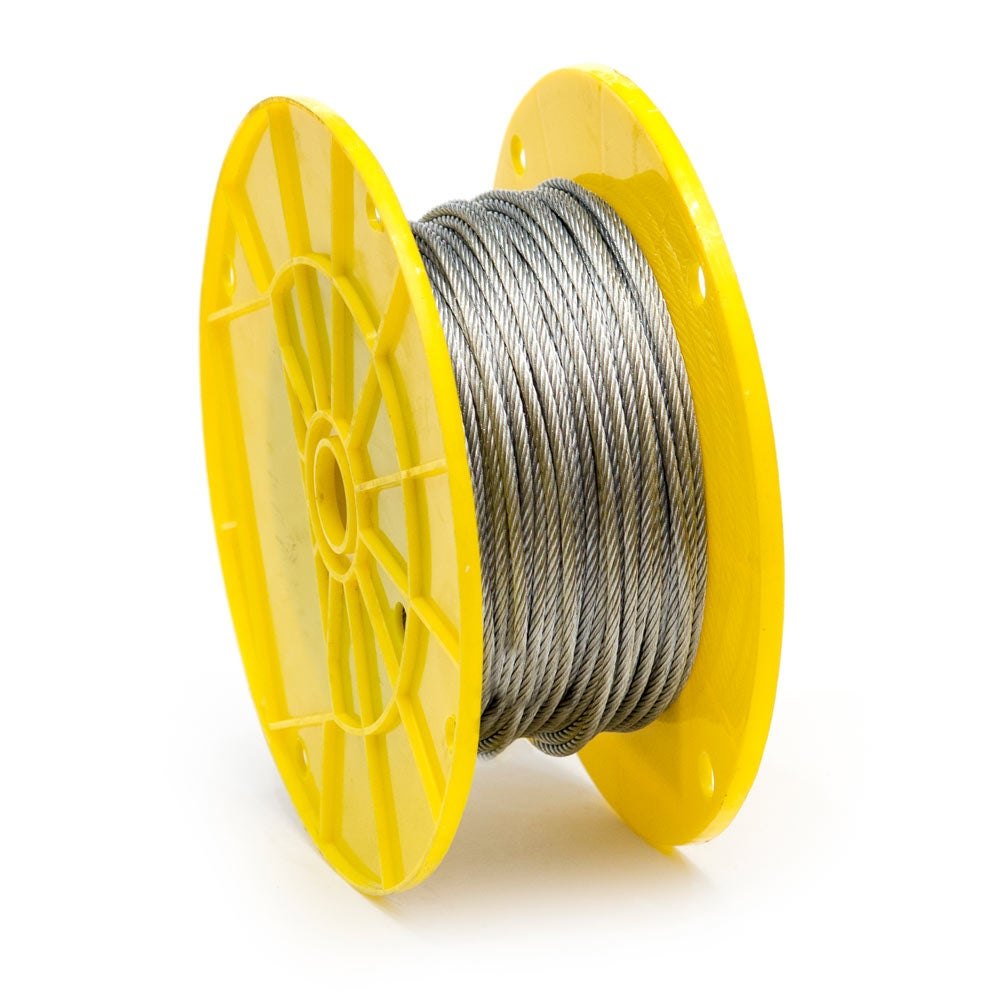
When you need to secure a railing, tension a cable fence, or build a load-bearing connection for a DIY project, the right Steel Cable is the difference between a safe setup and a dangerous failure. It is not a one-size-fits-all commodity; the diameter, strand count, and sheath material determine exactly how much weight it can hold and how it performs in wet or corrosive environments. For most home and light-industrial applications, a standard stainless steel cable offers the best balance of strength and longevity without the premium price of aerospace-grade alloys. If you are buying for a specific structural job, verifying the working load limit (WLL) against your exact use case is the single most important step before checkout.
| Quick Answer | |
|---|---|
| Best for | Railing installations, cable fencing, light rigging, and securing outdoor structures where corrosion resistance matters. |
| Skip if | You need a flexible cord for dynamic lifting (use a synthetic rope or chain instead) or if you cannot verify the specific WLL for your load. |
| One line | A durable, high-tensile strength cable that serves as the backbone for secure, long-lasting structural connections. |
Swipe sideways to compare →
Official Specs and What to Verify
The official product listing for this Steel Cable on the merchant site provides a catalog price of $1.00 USD, which typically reflects a per-foot or per-meter pricing model rather than a single fixed-length item. Because cable is often sold by the foot, the final cost depends entirely on the length you select at checkout.
While the general category is well-defined by industry standards, the specific technical data sheet for this exact SKU variant is not fully detailed in the provided research file. Before purchasing, you must verify the following on the product page or by contacting the seller: Confirm details on the current product page.
- Diameter: Common sizes range from 1/8" to 1/4" for residential railings.
- Material Grade: Is it 304 stainless, 316 marine-grade, or galvanized steel? (316 is best for coastal or high-moisture areas).
- Working Load Limit (WLL): The maximum safe load the cable can handle under tension.
- Sheath Type: 7x19 (flexible) vs. 7x7 (stiffer, higher strength).
Note: The merchant offers a 10-day return window for items in original packaging, so if the cable does not match your project’s length or gauge requirements, you have a short window to send it back. You can see current options.
What reviewers say
Reviews from YouTube say this about the Steel Cable.
On YouTube, one reviewer noted, "It's one of the great things about a cable system is they're really, really versatile." This highlights the core utility of steel cable: unlike rigid rods or bars, it can be routed around obstacles, tensioned to specific tightness levels, and used for both vertical and horizontal applications, making it a go-to solution for custom railing and fencing projects. [1]
Another video review of a cable tower system mentioned the "1 Critical Warning" regarding proper installation, emphasizing that while the cable itself is robust, the hardware (clamps, turnbuckles, and end fittings) must be rated for the same load. This is a critical point for any buyer of Steel Cable; the cable is only as strong as the weakest link in your assembly. [2]
A third review focused on the "Bells of Steel Cable Tower," praising the system's stability and the cable's ability to maintain tension over time without significant slack. This long-term tension retention is exactly what you want in a permanent installation like a deck railing or a gym cable machine. [3]
Who it's for
Homeowners and contractors building or repairing outdoor structures find this Steel Cable ideal for its tensile strength and weather resistance. If you are installing a cable railing system for a deck, a balcony, or a staircase, this product provides the necessary strength to keep the system safe and taut. It is also a perfect fit for DIYers working on cable fencing for gardens or small livestock, where the cable needs to withstand weather and occasional impact without stretching.
It is also suitable for light rigging applications, such as securing a trampoline, setting up a clothesline, or creating a suspension system for a hammock or a swing. In these cases, the cable’s resistance to UV degradation and rust ensures that the setup remains safe season after season, unlike synthetic ropes that can rot or degrade in sunlight. Confirm details on the current product page.
Who should skip
You should skip this product if you are looking for a flexible, non-conductive cord for electrical work or if you need a material that can be easily cut with standard household scissors. Steel cable requires specific tools, such as steel cable cutters, to be cut cleanly without fraying the strands. If you do not have the proper cutting tools or the knowledge to crimp the end terminals, you may find the installation process frustrating and potentially unsafe.
Additionally, if your project requires a material that is completely invisible or blends into a natural landscape, steel cable may be too industrial-looking. In those cases, a high-quality synthetic rope or a hidden mounting system might be a better aesthetic choice. Always check if your local building codes allow for cable railings in your specific area before committing to this material.
Mid-check
If the criteria above already match how you actually use the space, stop here and check current options before you keep reading comparison noise. Confirm details on the current product page.
How to choose in five minutes
- Measure your span: Determine the exact distance between your mounting points. Add 10-15% extra length for tensioning and terminal installation. See options
- Determine the load: What is the heaviest object or force this cable will need to hold? Check the WLL on the product page to ensure it exceeds your maximum load by a safety factor of at least 4:1. See options
- Check the environment: If you are near the ocean or in a high-humidity area, look for 316 stainless steel. For inland residential use, 304 stainless or galvanized steel is usually sufficient.
- Verify the hardware: Ensure you have the correct clamps, turnbuckles, and end caps. A steel cable tensioner is highly recommended for achieving the correct tightness without over-stressing the cable.
- Confirm the price: Since the base price is $1.00, calculate the total cost based on the length you need. Compare this against the cost of pre-cut cables to see if buying by the foot saves you money. See options
FAQ
What is the difference between 7x19 and 7x7 steel cable? 7x19 cable is more flexible and easier to work with, making it ideal for railings and applications where the cable needs to bend around corners. 7x7 cable is stiffer and has a higher breaking strength, making it better for applications where the cable will be under constant, straight-line tension. For most residential railing projects, 7x19 is the preferred choice due to its flexibility.
Can I use this cable for a suspension bridge or heavy lifting? No. This Steel Cable is intended for static or low-dynamic loads like railings and fencing. It is not rated for dynamic lifting, where the cable is subjected to shock loads and movement. For heavy lifting, you need a certified lifting cable with a specific safety certification.
How do I cut steel cable without fraying it? You must use a dedicated steel cable cutter. These tools have a hardened blade that cuts through the strands cleanly. If you use standard bolt cutters or a hacksaw, you will likely fray the strands, which weakens the cable and makes it difficult to install the end terminals.
Is the 10-day return policy enough to test the cable? The 10-day return window is standard for this merchant. It is enough time to receive the cable, measure it, and begin installation. However, once you have cut the cable or installed the permanent hardware, it is no longer in "original packaging" and may not be eligible for a return. Measure twice, cut once. Check the official listing before you buy.
Bottom line
The Steel Cable is a no-nonsense, high-performance material that is essential for any project requiring secure, long-lasting tension. While the $1.00 base price makes it an affordable entry point, the true value lies in its durability and the peace of mind that comes from using a material that won’t rot, stretch, or fail unexpectedly. If you are building a railing, a fence, or a light rigging system, this cable is a reliable choice that will hold up to the elements and the weight of your project.
Sources
- YouTube Review — https://www.youtube.com/watch?v=Sow7tnFKDMU&t=597s
- YouTube Review — https://www.youtube.com/watch?v=9Lm_ObQG13E
- YouTube Review — https://www.youtube.com/watch?v=R4BhTWkChws
Related Guides