Pressure Washer Surface Guide: Matching PSI, Hose Length, and Storage to Your Driveway
You know the specific frustration: you pull the standard garden hose out, only to find it tangled in a knot by the third step of the ladder, or you’re dragging a heavy, rigid pressure washer unit across the patio pavers because the cord is too short. It’s not just about blasting dirt; it’s about the friction of the setup. If your garage is already crowded with seasonal gear, the last thing you need is a bulky machine that takes up floor space for six months a year. You want a tool that cleans the oil stains off the concrete, the grime off the deck, and the pollen off the siding, then disappears into a corner without a fight.
This guide focuses on the intersection of cleaning power and storage efficiency. We’re looking at how retractable hose technology and wall-mounted designs change the daily experience of outdoor maintenance. We’re not just listing specs; we’re looking at how the hardware fits into your workflow.
Criteria: What actually changes the decision
Before you look at brand names, you need to know which specs matter for your specific surfaces. A pressure washer that is too powerful for vinyl siding can damage the material, while one that is too weak for concrete will just push dirt around.
| Feature | Why it matters for your home | What to look for |
|---|---|---|
| Retractable Hose Length | Determines your working radius without dragging. | 100 ft is standard for driveways; shorter for patios. |
| Wall-Mount Design | Saves garage floor space; keeps unit off the ground. | Ensure your wall can support the weight and pulling load. |
| PSI Rating | Cleaning power. | 1,500–2,000 PSI for decks/siding; 2,500+ for concrete. |
| Quiet Operation | Essential for early morning or evening use. | Look for "sleep mode" or quiet motor designs. |
| Warranty | Protection against motor or reel failure. | 2-year warranty is a strong baseline. |
Swipe sideways to compare →
The Hose Problem
A standard 50-foot garden hose is a tangle waiting to happen. When you’re washing a long driveway, you’re constantly stepping over the hose or dragging it behind you. A retractable hose reel solves this by pulling the hose back into a compact drum. The key is the length: if your driveway is longer than the hose, you’ll still be dragging. Most residential setups benefit from a 100-foot length, which covers the majority of suburban driveways and side yards.
Storage and Wall Mounting
This is the differentiator. Traditional pressure washers sit on the garage floor, taking up valuable space. A wall-mounted unit hangs vertically, freeing up floor space for bikes, ladders, or storage bins. However, wall mounting requires a sturdy surface. You need to confirm that your wall or ceiling can support the reel and the pulling load of the hose. If you’re renting or have drywall that isn’t backed by studs, you may need to look at floor-standing options or reinforce the mounting point.
Our shortlist
Giraffe Tools: The Storage-First Approach
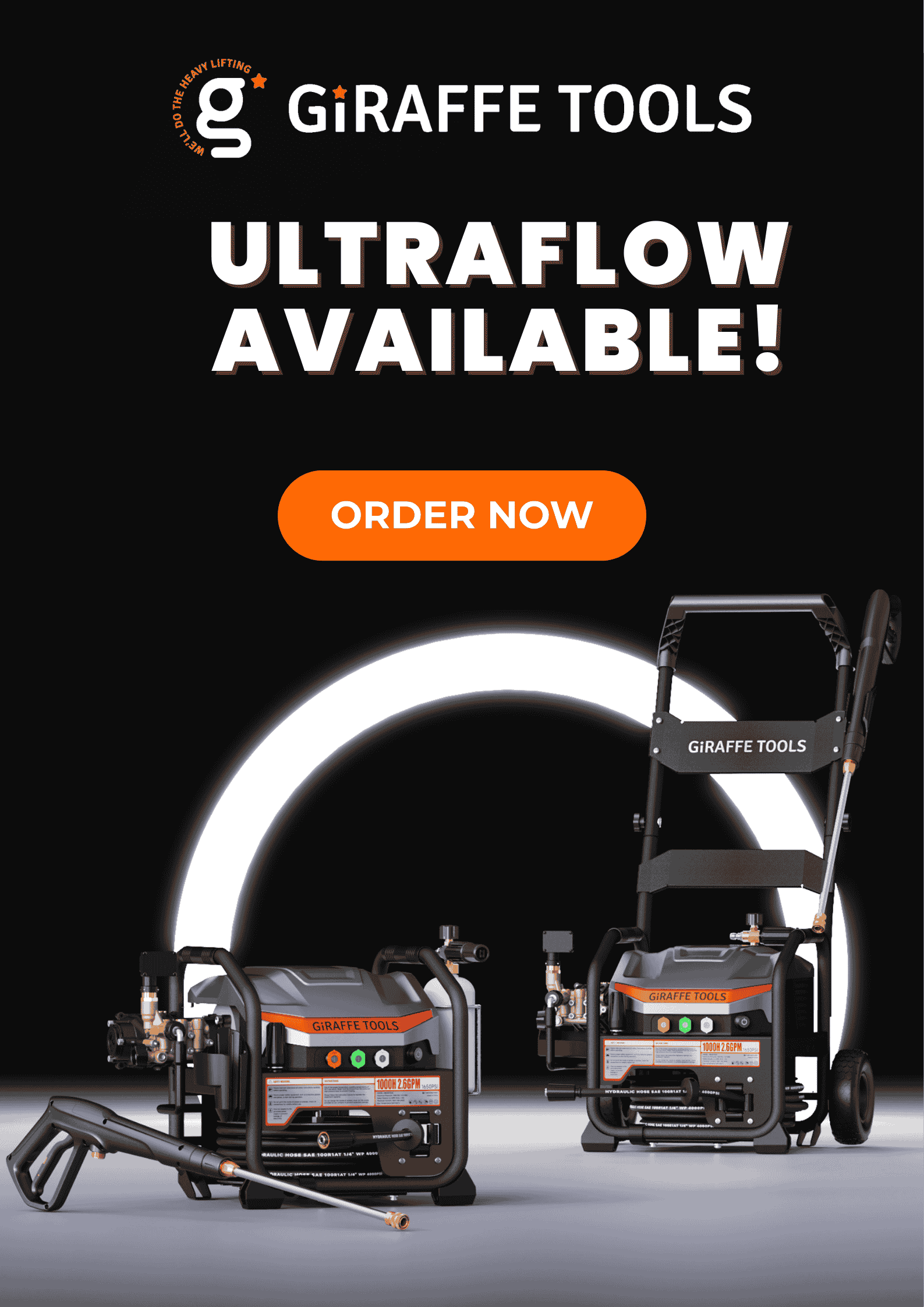
Giraffe Tools occupies a specific niche in the outdoor tools market: the intersection of retractable hose technology and pressure washing. Their core philosophy is that a tool should earn its shelf space by being easy to use and easy to store. This is particularly relevant for homeowners who have limited garage space or who are tired of the hassle of managing long, rigid hoses. The brand focuses on electric pressure washers that are designed for residential applications, emphasizing features like wall-mounted designs and quiet operation.
The Grandfalls Pro is a key model in their lineup, positioned for deep cleaning tasks. It’s part of a broader ecosystem that includes hose reels, air hose reels, and vacuum cleaners, all sharing the same retractable technology. This means if you already have a Giraffe Tools hose reel for watering, the pressure washer integrates into that same storage logic. The brand highlights patented features like the DS Trigger, G-Layering, and Shift-Lock, which are designed to improve the reliability and ease of use of the retractable mechanism. For a homeowner, this translates to a hose that doesn’t kink or tangle, and a trigger that doesn’t stick after a few uses.
From a buyer’s perspective, the value proposition is clear: you’re paying for convenience and space savings. The Giraffe Tools pressure washer collection includes models that are specifically designed to be wall-mounted, which is a significant advantage for those with cluttered garages. The brand also emphasizes safety features and energy efficiency, which are important considerations for residential use. If you’re looking for a pressure washer that fits into a broader home organization system, this is a strong contender.
Alternatives to Consider
If the wall-mounted, retractable approach doesn’t fit your home, there are other directions to consider. Traditional canister-style pressure washers offer higher PSI ratings for heavy-duty concrete cleaning. These are often more powerful but take up more floor space and require manual hose management. If your primary job is stripping old paint or cleaning large concrete surfaces, a traditional unit might be more appropriate.
Cordless battery pressure washers are another option for those who want portability. These are best for light-duty tasks like cleaning patio furniture or small decks. They lack the sustained power of electric or gas models, but they offer the convenience of no cords and no hoses. If your cleaning tasks are infrequent and light, a cordless model might be sufficient.
Gas pressure washers offer the highest power and mobility, but they come with noise, emissions, and maintenance requirements. They are best for large properties or commercial use. For most residential driveways and patios, they are overkill and add unnecessary complexity.
Mid-check
If you’re leaning toward a retractable, wall-mounted solution, the next step is to verify the specifics for your home. Check the weight of the unit to ensure your wall can support it. Measure your driveway to determine the required hose length. And confirm the PSI rating matches your cleaning needs.
How to choose in 5 minutes
- Identify your primary surface: Concrete (driveway), wood (deck), or vinyl (siding). This determines the PSI you need.
- Measure your workspace: How long is your driveway? How much floor space do you have in your garage?
- Check your wall: Can you mount a unit? If yes, a wall-mounted retractable system is likely the best choice for space savings.
- Review the warranty: Look for a 2-year warranty or better. This is a sign of confidence in the product’s durability.
- Compare the total cost: Factor in the cost of the pressure washer, the hose reel, and any necessary mounting hardware.
FAQ
What is the best pressure washer for a residential driveway?
For most residential driveways, an electric pressure washer with a PSI rating between 2,000 and 2,500 is ideal. This provides enough power to remove oil stains and dirt without damaging the concrete. A retractable hose system is highly recommended for convenience, as it eliminates the hassle of managing a long, rigid hose. Giraffe Tools offers several models in this range, with a 2-year warranty that provides peace of mind for residential use.
Can I mount a pressure washer on a drywall wall?
Generally, no. Drywall is not strong enough to support the weight of a pressure washer and the pulling load of a retractable hose. You need to mount the unit to a stud or a reinforced backing. If you’re unsure about your wall’s strength, consult a professional or consider a floor-standing option.
How long should my retractable hose be?
For most residential driveways, a 100-foot hose is the standard. This length covers the majority of suburban driveways and side yards. If your driveway is shorter, a 50-foot hose may be sufficient. If it’s longer, you may need to consider a longer hose or a different type of pressure washer.
What is the difference between PSI and GPM?
PSI (pounds per square inch) measures the force of the water, while GPM (gallons per minute) measures the volume of water. For cleaning, PSI is more important, but GPM affects how quickly you can rinse off dirt. A balance of both is ideal for most residential tasks.
Are retractable hoses more durable than standard hoses?
Retractable hoses are designed to be more durable than standard hoses, as they are protected from UV rays, abrasion, and tangling. However, they are more complex and can be more expensive to repair if they fail. A good warranty is essential when choosing a retractable hose system.
If the FAQ answered your main objections and you want current models or trial terms, see brand options.
Bottom line
Choosing the right pressure washer is about more than just power. It’s about how the tool fits into your home and your workflow. If you value space savings and convenience, a wall-mounted, retractable system like the Giraffe Tools lineup is a strong choice. It addresses the two biggest pain points of traditional pressure washers: hose tangling and garage clutter.
Before you buy, verify the mounting requirements for your home and confirm the PSI rating matches your cleaning needs. The Giraffe Tools official site has detailed specifications for each model, including warranty and shipping information.
Some links on this page may be affiliate links. We may earn a commission if you buy through them, at no extra cost to you.
Related guides