John Boos & Boos Blocks Review: The Workhorse Cutting Board That Outlasts the Knife
There is a specific kind of silence that comes from a solid wood block when you set a heavy chef’s knife down on it. It is not the hollow thud of a plastic board, nor the creak of a thin butcher block that has started to warp. It is a dense, final sound that tells you the tool is built to stay put. The John Boos & Boos Blocks line is the industry standard for exactly that reason: it is the surface you reach for when you are prepping for a dinner party, breaking down a whole chicken, or just want a board that will still look sharp in twenty years. If you are tired of replacing boards that get gouged or stained after a few months, this is the upgrade that actually holds up.
You can see the current lineup and pricing for John Boos & Boos Blocks to find the exact size that fits your counter space.
Quick Answer
| Best for | Skip if | One line |
|---|---|---|
| High-volume home cooks, bakers, and those who want a "buy it for life" prep surface. | You need a lightweight board to carry to the table, or you are on a strict budget for a first-time purchase. | A dense, NSF-certified maple block that requires minimal maintenance and offers superior knife edge retention. |
Swipe sideways to compare →
What actually changes the buy is fit, what you should skip, and which tradeoffs show up after week one — not a longer spec sheet. If you already know the job, see current options while you read the criteria.
What the Official Page Actually Lists
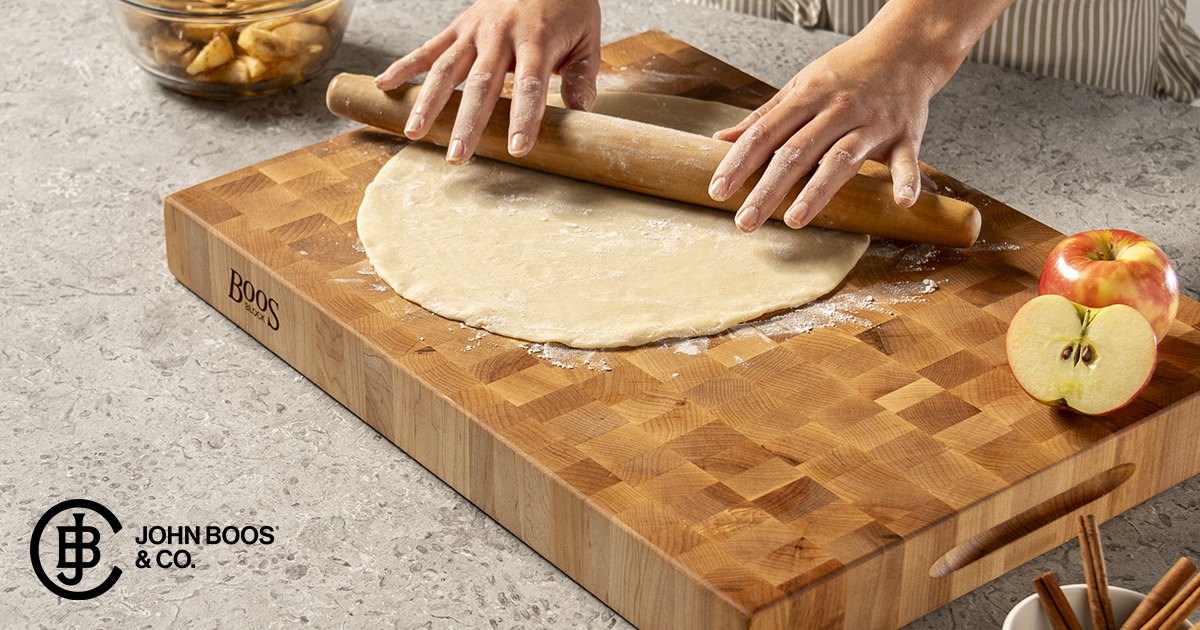
John Boos & Co. builds these blocks primarily from Northern Hard Rock Maple (and occasionally Cherry or Walnut for specific lines). The construction is the key differentiator: most standard Boos Blocks use end-grain construction, which means the wood fibers are oriented perpendicular to the surface, similar to a parquet floor. This is why the board is so durable; the wood fibers "heal" over knife cuts rather than splitting along the grain.
Here are the core specifications found across the main Boos Block product lines:
| Feature | Detail |
|---|---|
| Material | Solid North American Hard Rock Maple (NSF Certified) |
| Construction | End-Grain (standard) or Edge-Grain (select lines) |
| Thickness | Typically 1-1/2" (38mm) for standard blocks; 4" for heavy-duty work tables |
| Finish | Food-safe oil finish (requires periodic re-oiling) |
| Certification | NSF Certified (meets public health and safety standards) |
| Sizes | Ranges from small prep blocks (e.g., 12"x18") to large work tables (e.g., 48"x36") |
| Maintenance | Hand wash with mild soap; re-oil every 6–12 months or when dry |
Swipe sideways to compare →
Note: Specific dimensions and wood species can vary by the exact model number (e.g., CB series vs. work tables). Verify the exact specs for your chosen size on the official product page.
What Reviewers Say
Reviews from YouTube say this about the John Boos & Boos Blocks.
YouTube In a detailed breakdown titled "Honest Review of This Boos Block Cutting Board!," the creator highlights the sheer density of the maple and how it handles heavy use without showing significant wear. The video notes that while the initial price is higher than plastic or composite boards, the longevity makes it the most cost-effective option over time. This aligns with the core value proposition of the Boos Block: it is a tool that outlasts the cookware you use on it. Confirm details on the current product page.
Another popular comparison, "Comparing the Boos Block vs Epicurean Cutting Boards," focuses on the tactile difference between the two. The reviewer notes that the Boos Block feels "substantial" and "grounded," which provides a stable platform for precision cuts. This stability is a major reason why professional kitchens and serious home cooks prefer the maple construction for daily prep work. Check the official listing before you buy.
Finally, a video titled "End Grain VS Edge Grain | Boos Block Surfaces" explains why the end-grain construction is superior for knife edge retention. The narrator points out that the end-grain surface is gentler on knife edges, meaning you will sharpen your knives less frequently. This is a practical benefit for anyone who wants to maintain sharp tools without constant upkeep. Confirm details on the current product page.
Who It's for
If you are a cook who treats your kitchen as a workspace rather than just a room, the John Boos & Boos Blocks is a natural fit. It is ideal for:
- High-Volume Prep: If you are meal-prepping for the week or hosting large gatherings, the large surface area and durability handle the abuse.
- Knife Enthusiasts: The end-grain construction is gentler on high-carbon steel and Japanese knives, preserving your edge.
- Aesthetics: The natural maple grain looks beautiful on an open counter or island. It is a piece of furniture as much as a tool.
- Bakers: The dense surface is excellent for kneading dough and rolling out pastry without the board shifting. See options
You can explore the different sizes available for John Boos & Boos Blocks to match your specific workflow.
Who Should Skip
This is not the right tool for everyone. You should skip the John Boos & Boos Blocks if:
- You Need Portability: These blocks are heavy. A standard 12"x18" block can weigh several pounds. It is not a board you will want to carry from the counter to the table.
- You Are on a Tight Budget: The upfront cost is significantly higher than plastic or bamboo boards. If you are just starting out and unsure about your cooking habits, a cheaper board might be a better first step.
- You Want Zero Maintenance: While low-maintenance compared to other woods, it still requires periodic oiling. If you want a "set it and forget it" board, a composite or plastic board might be less hassle.
- You Have Limited Counter Space: The larger blocks are substantial. Measure your space carefully before ordering a large work table. See options
For a more affordable entry point, you might consider the John Boos & Kitchen Carts which offer similar maple surfaces in a mobile format.
Mid-check
If the criteria above already match how you actually use the space, stop here and check current options before you keep reading comparison noise. Confirm details on the current product page.
How to Choose in Five Minutes
- Measure Your Space: Decide if you need a small prep block (12"x18" or 14"x20") for daily use or a larger work table (36"x24" or bigger) for serious prep. See options
- Choose Your Wood: Maple is the standard and most durable. Cherry is softer and takes a beautiful patina over time but is more prone to dents. Stick with Maple for a workhorse. See options
- Check the Construction: Look for "End-Grain" in the product description. This is the premium construction that offers the best knife retention and durability. See options
- Verify NSF Certification: Ensure the product is NSF Certified, which means it meets strict standards for food safety and hygiene. See options
- Read the Care Instructions: Understand that you will need to oil the board. This is a 5-minute task every few months that keeps the wood healthy. See options
You can compare the John Boos & Boos Blocks models to find the perfect fit for your kitchen.
FAQ
How often do I need to oil a John Boos & Boos Blocks? You should oil the board every 6–12 months, or whenever the wood starts to look dry or pale. A quick rub-down with food-safe mineral oil or a dedicated board conditioner is all it takes.
Can I put a John Boos & Boos Blocks in the dishwasher? No. The wood will warp, crack, and the finish will strip. Always hand wash with mild soap and dry immediately.
What is the difference between a Boos Block and a regular butcher block? The primary difference is the construction. Boos Blocks are typically made from end-grain maple, which is more durable and knife-friendly. Regular butcher blocks are often edge-grain or flat-grain, which are less durable and more prone to gouging. Check the official listing before you buy.
Is the John Boos & Boos Blocks NSF Certified? Yes, most John Boos & Boos Blocks are NSF Certified, meaning they meet public health and safety standards for food service equipment.
Can I use a John Boos & Boos Blocks for serving? Yes, the natural maple finish is food-safe and looks beautiful. However, due to the weight, it is best used as a serving platter for stationary items like cheese or charcuterie, not for carrying food to the table.
If the FAQ answered your main objections and you want current models or trial terms, see brand options.
Bottom Line
The John Boos & Boos Blocks is not just a cutting board; it is a piece of kitchen infrastructure. It is dense, durable, and built to last for decades. If you are serious about cooking and want a tool that will serve you well for years, this is the investment to make. It requires a bit of care, but the payoff is a surface that stays beautiful and functional long after other boards have retired.
If you are ready to upgrade your prep surface, see current options for John Boos & Boos Blocks.
Sources
- YouTube — Honest Review of This Boos Block Cutting Board! — https://www.youtube.com/watch?v=VwdXMNVtAmQ
- YouTube — Comparing the Boos Block vs Epicurean Cutting Boards — https://www.youtube.com/watch?v=JT6D1Rcj05o
- YouTube — End Grain VS Edge Grain | Boos Block Surfaces — https://www.youtube.com/watch?v=c_MFmUjaxVQ
Related Guides