Best Sewing Machine for Beginners in 2026: Start With the Right Machine
You’ve got the fabric, the pattern, and a vague idea of what you want to make. But standing in front of a sewing machine for the first time, the dial of settings and the tangle of threads can feel like a language you didn’t study in school. The biggest mistake beginners make isn’t buying the wrong brand; it’s buying a machine that’s too complex or too limited for their actual first project. Whether you’re hemming jeans, making a simple tote bag, or starting a quilting hobby, the right machine should feel like a helpful tool, not a puzzle box. Check the official listing before you buy.
What actually matters for a beginner
Before you look at stitch counts or screen sizes, you need to understand how the machine will feel in your hands. A machine that is too heavy or too loud might make you want to put the fabric away before you even start. Here are the criteria that actually change the decision for a first-time user. Confirm details on the current product page.
| Criteria | Why it matters for beginners |
|---|---|
| Ease of threading | Manual threading can be frustrating. Look for automatic threaders or clear, color-coded guides to reduce initial stress. |
| Weight and portability | A lighter machine is easier to move to a table or store away. If you’re working in a small space, this is a major comfort factor. |
| Built-in stitches | You don’t need 300 stitches. A solid selection of straight, zigzag, and buttonhole stitches covers 90% of beginner projects. |
| Noise level | A quieter motor makes it easier to focus on the rhythm of sewing, especially if you’re working late at night. |
| Support and resources | Access to video tutorials and local repair shops helps when you inevitably get a thread jam or a needle break. |
Swipe sideways to compare →
Our shortlist
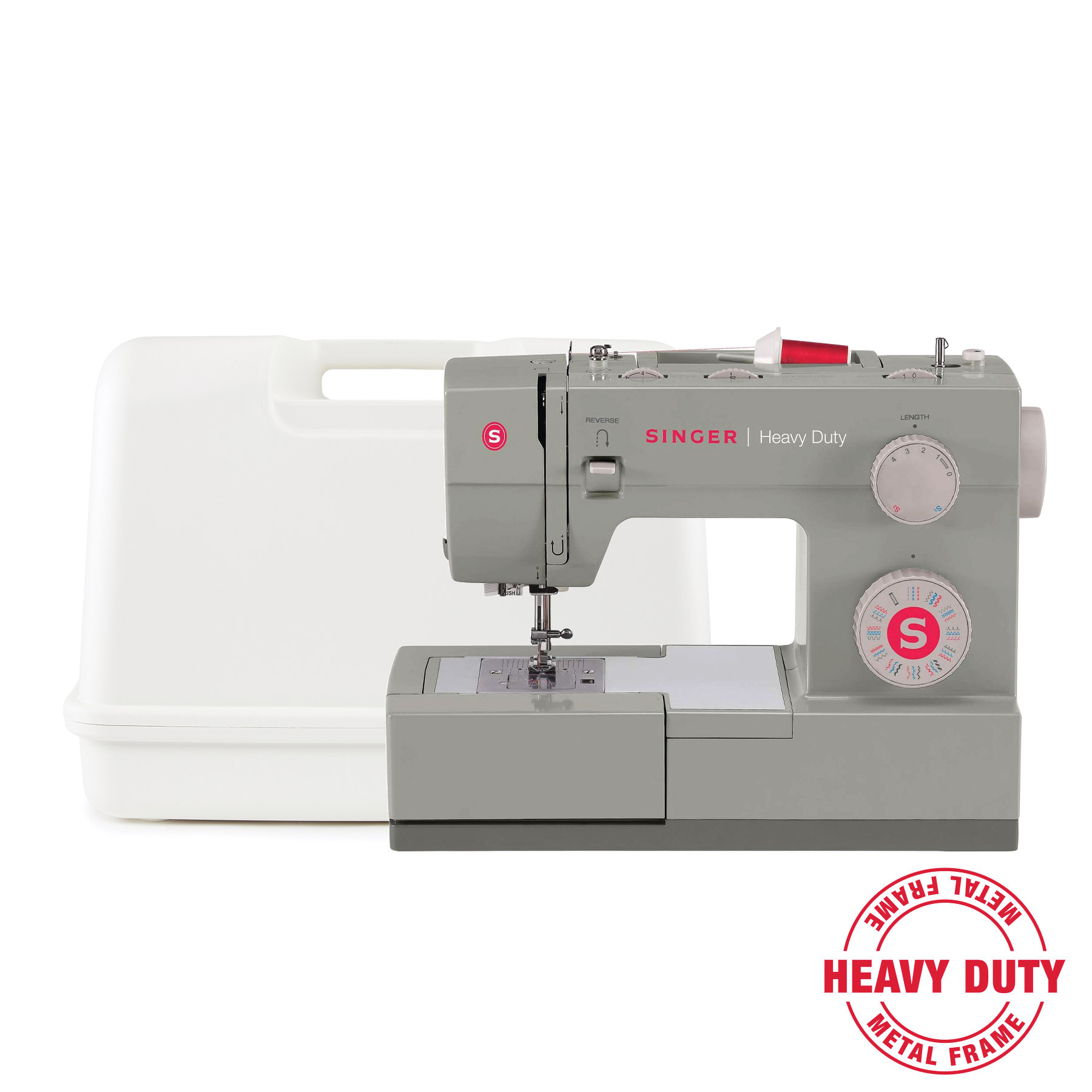
For most beginners, the path of least resistance is a standard, full-size sewing machine from a major brand. Singer’s lineup is particularly strong here because it spans a wide range of price points and complexity levels. You can start with a basic model that handles everyday repairs and simple crafts, and then move up to a more advanced machine as your confidence grows. The brand’s long history means that the "Heavy Duty" line, for instance, is well-known for its ability to handle thicker fabrics without breaking, which is a nice safety net if your first project turns out to be a denim jacket rather than a cotton tote. You can see current options.
When you look at the Singer Heavy Duty 4511 or similar models in the 4000 series, you’re looking at machines that are designed to be forgiving. They often come with a larger workspace, which gives you room to maneuver larger pieces of fabric without the machine feeling cramped. This is a subtle but important detail: a cramped workspace can make it hard to see your stitching, leading to mistakes that are frustrating to fix. By choosing a machine with a bit more room, you’re investing in your own ability to learn the craft without constant physical barriers.
If you are leaning toward a more compact or specialized machine, be aware that some "beginner" labels are applied to machines that are actually quite specialized. For example, a serger is a fantastic tool for finishing edges, but it is not a replacement for a standard sewing machine. If you buy a Singer S0080 Serger as your first machine, you will find that it cannot do a standard straight stitch for attaching a button or sewing a seam in the traditional way. It’s a great second machine, but rarely the right first one. Similarly, if you find a machine that is extremely lightweight, check the weight of the motor. Very light machines sometimes have less power, which can struggle with the denser fabrics you might encounter as you expand your projects.
Mid-check
If you’re still weighing the options, it’s worth looking at the specific features that solve the most common beginner pain points: threading and tension. Many modern Singer models include an automatic needle threader, a feature that saves you from the squinting and frustration of trying to pull a thread through a tiny eye. If that convenience is a dealbreaker for you, see brand options to filter for models with this feature.
How to choose in 5 minutes
If the criteria already match how you live in the space, see current options before you keep comparing.
- Define your first project. Are you doing repairs, making clothing, or quilting? This determines how much power and space you need. See options
- Check the "Heavy Duty" label. If you plan to sew through denim, canvas, or multiple layers, look for models with a metal frame or a "Heavy Duty" designation. See options
- Look for an automatic threader. This is the single most helpful feature for reducing initial frustration. See options
- Read the warranty and return policy. Make sure you have a clear path to return the machine if it doesn’t feel right after your first session. See options
- Check the noise level. If you’re sensitive to sound, look for reviews that mention the motor’s quietness. See options
FAQ
Is Singer a good brand for a first sewing machine?
Yes, Singer is one of the most recommended brands for beginners because of its wide availability and extensive support network. The brand offers a range of machines from basic to heavy-duty, allowing you to start simple and upgrade later. Their Heavy Duty 4523 and similar models are frequently cited for their balance of power and ease of use.
Do I need a serger to start sewing?
No. A serger is a specialized machine used primarily for finishing edges. While it can speed up your workflow, it is not necessary for learning the basics of sewing. You can start with a standard sewing machine and add a serger later if you find yourself doing a lot of professional-grade finishing. Check the official listing before you buy.
What is the difference between a "Heavy Duty" and a regular sewing machine?
"Heavy Duty" machines typically have a stronger motor, a metal frame, and the ability to sew through thicker fabrics without jamming. For a beginner who might only be sewing cotton, a regular machine is fine. However, if you plan to work with denim or leather, a heavy-duty model like the [Singer Heavy Duty 4552](https://www.tkqlhce.com/click-101855392-15910665-1758161798000?sid=home_singer-sewing-machin_blog_best-sewing-machine-for-beginne_a] is a safer bet. You can see current options.
How much should I spend on my first sewing machine?
You don’t need to spend a fortune to get a good machine. Many reliable beginner machines fall in the $150–$300 range. However, if you plan to sew frequently or work with heavier fabrics, investing in a mid-range model can save you money in the long run by reducing the likelihood of breakdowns. You can see current options.
Can I learn to sew on a computerized machine?
Yes, but it might be more complex than a mechanical one. Computerized machines offer more features, but they also have more buttons and settings to learn. If you are a total beginner, a simpler machine with fewer buttons might be less overwhelming. That said, many beginners find the precision of computerized machines helpful for consistent stitching. Confirm details on the current product page.
Bottom line
Choosing your first sewing machine is about finding a tool that fits your current skill level and your immediate projects. Singer offers a robust selection of machines that are designed to be accessible to new users while still providing the durability to last as you grow. Start with a model that has an automatic threader and a good selection of basic stitches, and you’ll be well on your way to creating your first project. You can see current options.
Related guides